





























- THC
- 21%
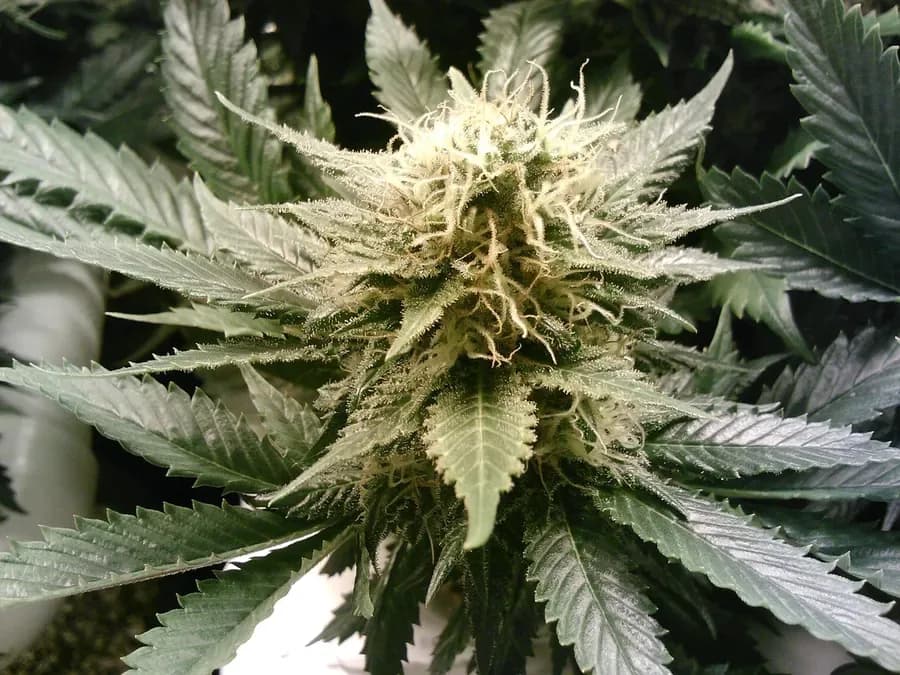
White Rhino strain
Green House Seeds' White Widow × Afghan indica: stout, heavy-yielding and sedating, with woody-earthy aroma, 21% THC median and cup placings from 1996.
Not yet reviewed by our editors. Figures come from the sources listed below. How we check
- Lineage
- White Widow × an Afghan indica (Green House Seeds); Leafly lists White Widow × North American Indica
- Breeder
- Green House Seeds
Terpene profile
- Myrcenedominant
- Alpha-Pinenesecondary
- Terpinolenesecondary
- Limoneneminor
Segments show how prominent each terpene is reported to be — not measured percentages.
Reported effects
May cause
What consumers commonly report. Effects vary with dose, tolerance and batch.
- Woody
- Earthy
- Pungent
- Skunk
About White Rhino
White Rhino was built for weight, in both senses. Green House Seeds lists yields of up to 900 grams per square meter indoors and 1,200 grams per plant outdoors, and describes the effect as strongly sedative, almost narcotic. Leafly's reviewers back up the second part: sleepy and relaxed are the top tags, followed by tingly and hungry.
The breeder lists its genetic background as Afghan, Brazilian and South Indian, which lines up with a White Widow mother, itself Brazilian and Indian, crossed with an Afghan indica. Leafly calls the father North American Indica. Either way, the plant grows bushy and stout, in Leafly's words.
Aroma and potency
Reviewers tag woody, earthy, pungent and skunky notes, with some floral sweetness. Myrcene and pinene lead the lab profile, with terpinolene third, and the median THC on Leafly is 21%. Green House's own figures are older and much lower, at 11% THC and 1.6% CBD, a gap worth remembering when old breeder figures are compared with current lab medians. Dry mouth and headaches are the common complaints.
White Rhino vs White Widow
White Rhino keeps the frost of its White Widow parent, but reviewers describe a much heavier body, which makes it a night strain for most. It is also the documented parent of Romulan and Green Lantern, according to Leafly.
Growers get a productive plant. Green House lists about nine weeks of flowering indoors and an early-October harvest outdoors in the northern hemisphere; Leafly rates it moderate to grow with high yields. The seeds are sold feminized.
Origin & history
White Rhino is a Green House Seeds strain from White Widow and an Afghan indica. It took second place in the Bio category at the 1996 High Times Cannabis Cup in Amsterdam and later second places at the Spannabis Champions Cup in 2005 and 2007, according to SeedFinder and the breeder's own description. Leafly lists Romulan and Green Lantern among its descendants.
What people use it for
- Aches and pains
- Trouble sleeping
- Stress
These are reasons consumers give for choosing White Rhino, gathered from public strain reports. They are not medical claims or advice, and they haven’t been tested in clinical trials. If you’re managing a health condition, talk to a clinician.
White Rhino: frequently asked questions
What is White Rhino a cross of?
Green House Seeds describes White Rhino as White Widow crossed with an Afghan indica, with Afghan, Brazilian and South Indian ancestry. Leafly lists the father as North American Indica.
Is White Rhino strong?
Leafly's lab-based median is 21% THC, and reviewers most often describe it as sleepy and relaxed.
Did White Rhino win any awards?
It placed second in the Bio category at the 1996 High Times Cannabis Cup and second at the Spannabis Champions Cup in 2005 and 2007.
Sources
- Leafly — White Rhino strain page · checked Sep 2026
- SeedFinder — White Rhino (Green House Seeds) · checked Sep 2026
- AllBud — White Rhino strain page · checked Sep 2026
If you like White Rhino
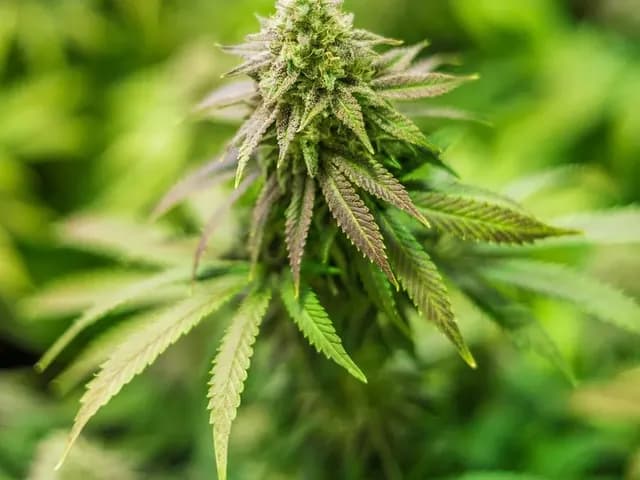 hybrid
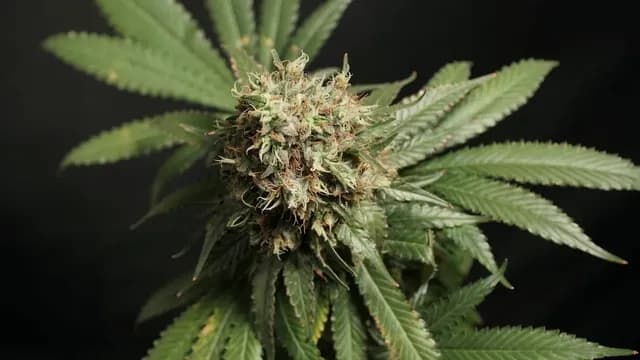
White Widow
Brazilian sativa landrace × South Indian indica (per Green House Seeds)
THC15–25%Myrcene · Beta-Caryophyllene · Alpha-Pinene
- Euphoric
- Uplifted
- Talkative
 indica
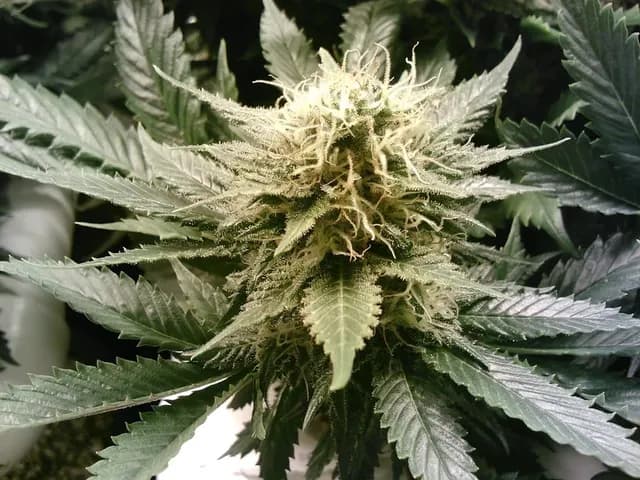
Afghan Kush
Afghan landrace indica from the Hindu Kush range (selected seed lines rather than a single cross)
THC15–21%Myrcene · Beta-Caryophyllene · Alpha-Pinene
- Sleepy
- Hungry
- Relaxed
 indica
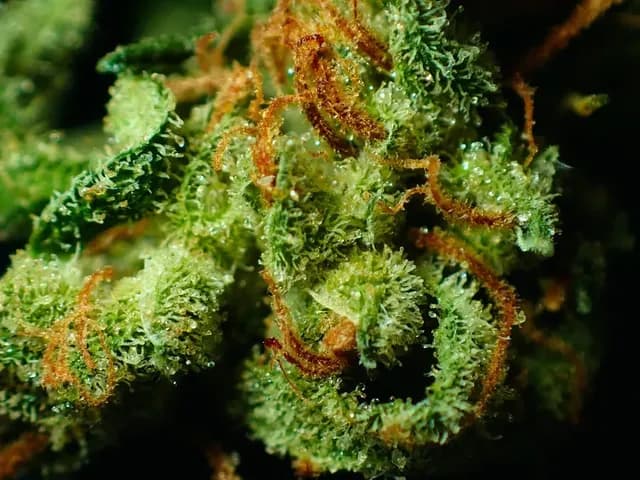
Northern Lights
Afghani × Thai (reported; the original cross is undocumented)
THC16–21%Myrcene · Beta-Caryophyllene · Limonene
- Sleepy
- Relaxed
- Hungry
 hybrid
OG Kush
Unconfirmed; usually given as Chemdawg × Hindu Kush, with some accounts adding Lemon Thai
THC18–25%Myrcene · Limonene · Beta-Caryophyllene
- Hungry
- Relaxed
- Sleepy