





















- THC
- 15–25%
- CBD
- 0.1–1.4%
White Widow strain
White Widow is a balanced Dutch hybrid of Brazilian and South Indian genetics, famous for frosty buds, woody-earthy aroma and a talkative, upbeat high.
- Lineage
- Brazilian sativa landrace × South Indian indica (per Green House Seeds)
- Breeder
- Green House Seeds, Amsterdam (released 1994); creation is credited to Shantibaba (Scott Blakey), who later moved the parent lines to Mr. Nice Seedbank as Black Widow — attribution is disputed
- Origin
- Netherlands
Terpene profile
- Myrcenedominant
- Beta-Caryophyllenesecondary
- Alpha-Pinenesecondary
- Limoneneminor
- Humuleneminor
Segments show how prominent each terpene is reported to be — not measured percentages.
Reported effects
May cause
What consumers commonly report. Effects vary with dose, tolerance and batch.
- Woody
- Earthy
- Pepper
- Pine
- Floral
- Sweet
About White Widow
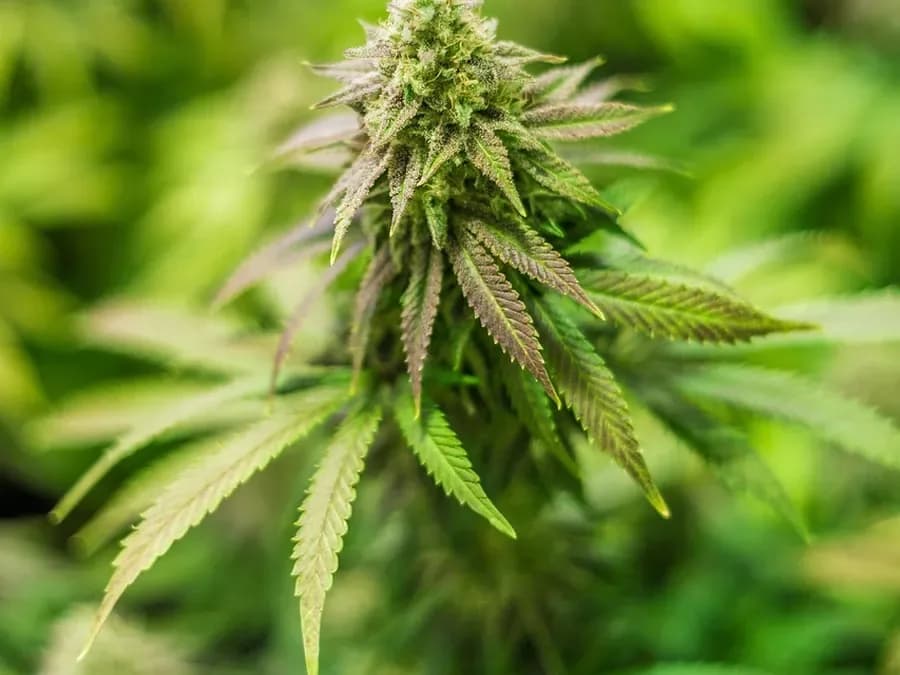
The White Widow strain takes its name from the way the buds look near harvest: so heavily coated in trichomes that they read as white from across a room. It was one of the defining varieties of Amsterdam's 1990s seed trade and is still one of the most requested names in Dutch coffeeshops, according to Green House Seeds. Is White Widow indica or sativa? It sits close to the middle. Green House lists its version as 60% indica and 40% sativa, while Leafly and AllBud describe the reverse, so "balanced hybrid" is the fairest label.
The aroma is old-school rather than fruity. Green House, High Times and Leafly's lab data all place myrcene, pinene and beta-caryophyllene at the top of the profile, which comes across as damp earth and dry wood with a peppery, resinous pine edge. Leafly reviewers rank woody and earthy notes highest, and Green House says some phenotypes carry a faint metallic note. Anyone used to modern dessert cultivars should expect something drier and more herbal.
White Widow effects are usually described as starting in the body before opening into a chatty, upbeat headspace. In Leafly's user data the leading reports are euphoric, uplifted, talkative, happy and creative, all at similar strength, which is why people who like social daytime sessions keep it around. Potency is where sources disagree most: Leafly's lab-data median is 15% THC, AllBud and High Times quote 18–25%, and Green House published a 25.76% test result. Newer consumers are better off assuming the upper end. Dry mouth, dry eyes and dizziness are the most common complaints; paranoia shows up more than with heavy indicas but far less than with Haze in Leafly's data.
White Widow also became a parent in its own right. Serious Seeds crossed it with AK-47 to make White Russian, and Wikipedia lists Blue Widow and Moby Dick among its well-known offspring. Growers get a bushy plant with short internodes; it needs roughly 8–9 weeks of bloom and handles SOG and ScrOG well. The same dense, resin-heavy buds that give the strain its name are the part to watch: good airflow and careful watering matter late in bloom.
Origin & history
Green House Seeds released White Widow in 1994, and its entry won both the main competition and the Bio category at the 1995 High Times Cannabis Cup in Amsterdam. The creation story is contested. Shantibaba (Scott Blakey), who co-founded Green House with Arjan Roskam, says he bred it from a Brazilian sativa male and a South Indian mother from Kerala. When he left to found Mr. Nice Seedbank he took those parent lines with him, and they are sold there as Black Widow. Green House continues to sell White Widow under the same Brazilian × South Indian description.
What people use it for
- Stress
- Aches and pains
- Low mood
- Nausea
- Low appetite
These are reasons consumers give for choosing White Widow, gathered from public strain reports. They are not medical claims or advice, and they haven’t been tested in clinical trials. If you’re managing a health condition, talk to a clinician.
White Widow: frequently asked questions
Is White Widow indica or sativa?
It is a balanced hybrid. Green House Seeds lists its version as 60% indica and 40% sativa, while Leafly and AllBud describe it as 60% sativa, so it is best treated as sitting near the middle.
Who created White Widow?
Green House Seeds released it in 1994 and won the 1995 Cannabis Cup with it. Shantibaba, who worked at Green House at the time, is credited with the cross and later sold the parent lines as Black Widow through Mr. Nice Seedbank; the attribution is still debated.
How much THC does White Widow have?
Figures vary widely. Leafly's lab-data median is 15%, AllBud and High Times list 18–25%, and Green House has published a test result of 25.76%.
Sources
- Leafly — White Widow strain page (lab-data medians, user-reported effects) · checked Sep 2026
- AllBud — White Widow · checked Sep 2026
- Green House Seed Co. — White Widow · checked Sep 2026
- High Times — White Widow strain profile · checked Sep 2026
- Wikipedia — White Widow (cannabis) · checked Sep 2026
- CannaConnection — Who created the original White Widow strain? · checked Sep 2026
- Wikipedia — Cannabis Cup (list of past High Times Cannabis Cup winners) · checked Sep 2026
If you like White Widow
 hybrid
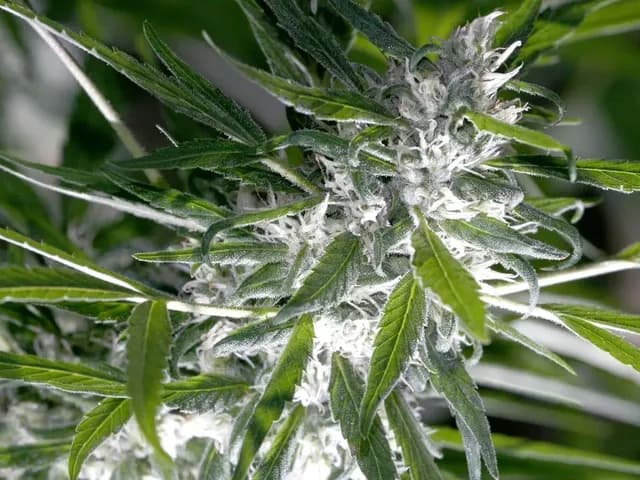
AK-47
Colombian × Mexican × Thai × Afghani seed stock; Serious Seeds keeps the exact pedigree secret
THC13–21.5%Myrcene · Alpha-Pinene · Beta-Caryophyllene
- Hungry
- Happy
- Talkative
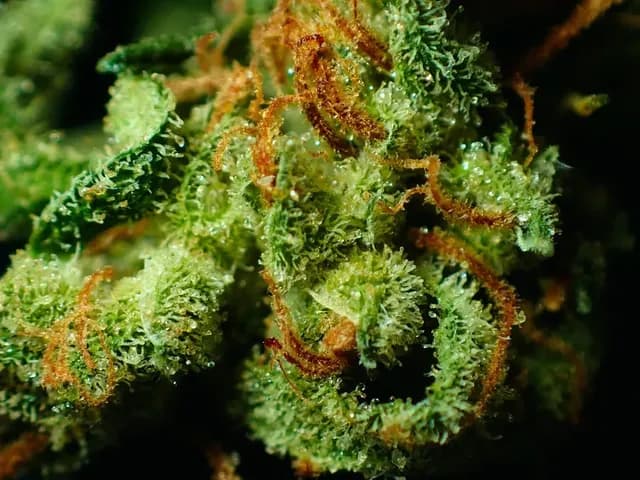 hybrid
Blue Dream
Blueberry × Haze; the Santa Cruz clone is usually described as DJ Short Blueberry × a Santa Cruz Haze, and some seed versions use Super Silver Haze
THC17–24%Myrcene · Alpha-Pinene · Beta-Caryophyllene
- Creative
- Euphoric
- Happy
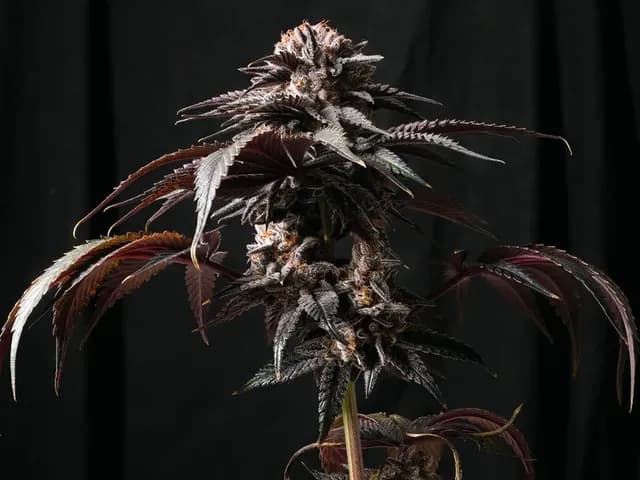 hybrid
Trainwreck
Mexican and Thai sativas × Afghani indica (per Leafly and CannaConnection)
THC17–25%Terpinolene · Myrcene · Alpha-Pinene
- Euphoric
- Uplifted
- Creative
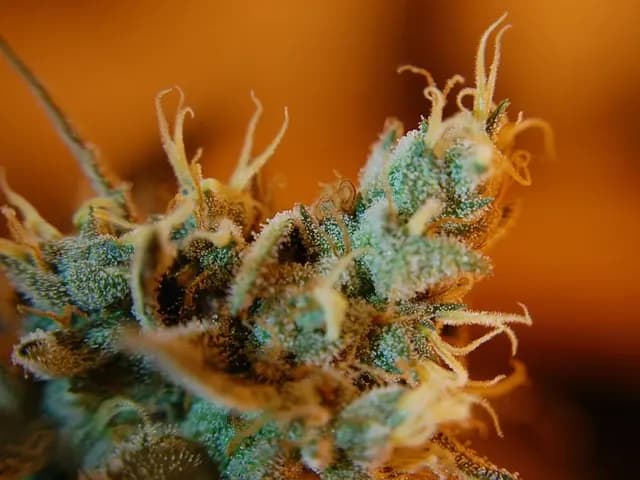 hybrid
Pineapple Express
Trainwreck × Hawaiian (the version credited to G13 Labs)
THC20–25%Myrcene · Beta-Caryophyllene · Alpha-Pinene
- Happy
- Energetic
- Talkative