



















- THC
- 16–20%
- CBD
- 0–1%
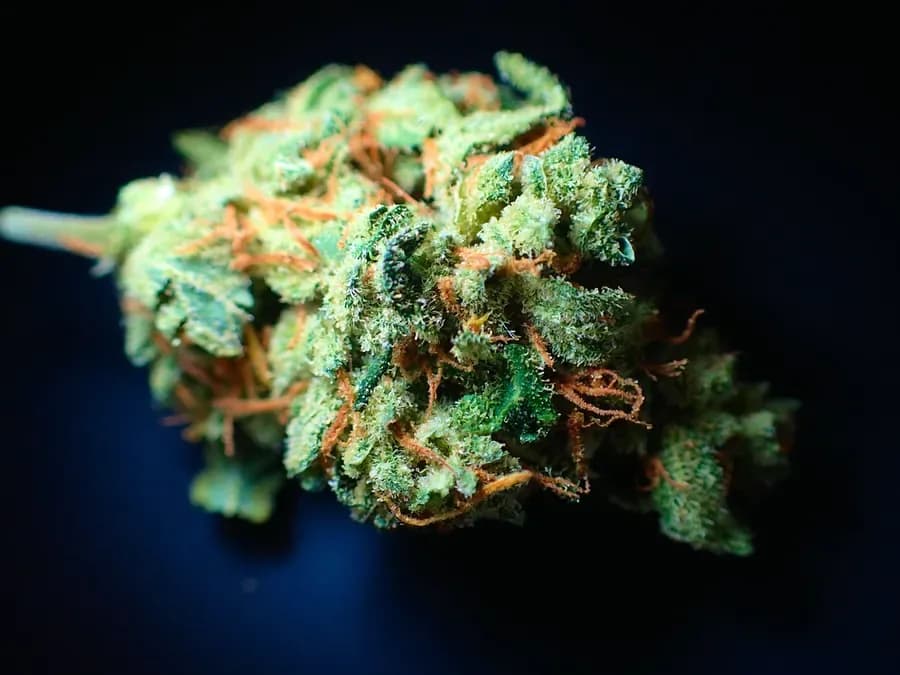
Purple Haze strain
Purple Haze is a sativa of Purple Thai and Haze lineage named for the Hendrix era, with berry-floral aroma and a creative, euphoric high.
- Lineage
- Purple Thai × Haze (the most widely circulated version; several genetically different seed lines use the name)
- Breeder
- Unconfirmed; the name dates to the late-1960s counterculture and no breeder-to-release record exists
Terpene profile
- Myrcenedominant
- Beta-Caryophyllenesecondary
- Limonenesecondary
- Alpha-Pineneminor
- Ocimeneminor
Segments show how prominent each terpene is reported to be — not measured percentages.
Reported effects
May cause
What consumers commonly report. Effects vary with dose, tolerance and batch.
- Lavender
- Floral
- Violet
- Berry
- Sweet
- Earthy
- Spicy
About Purple Haze
The Purple Haze strain is a name before it is a plant. It carries the psychedelic associations of Jimi Hendrix's 1967 song, and several different seed lines have been sold under it since. The version most people meet today, and the one High Times and Leafly describe, is Purple Thai crossed with Haze. Is Purple Haze indica or sativa? Sativa in character: Leafly classifies it as a sativa, while AllBud and High Times call it a sativa-dominant hybrid.
Its aroma is sweeter and more floral than most Haze relatives. Leafly reviewers rank lavender, floral and violet notes first, followed by sweet, earthy and berry, and High Times traces the smell from ripe berry toward damp soil, pepper and incense. Leafly's lab data shows myrcene leading, with beta-caryophyllene and limonene nearly tied behind it, and CannaConnection's listing names linalool as the main terpene instead — a reminder that different Purple Haze lines do not smell identical.
Purple Haze effects center on the head. In Leafly's user data creative is the strongest report, followed by euphoric, talkative, uplifted, energetic and happy, and High Times describes a quick, bright onset with a lighter physical hum underneath. People usually reach for it in the daytime or for music and social plans. It has a higher share of dizziness, headache and paranoia reports than calmer hybrids, so it is less forgiving if you overdo it. THC is moderate for a classic, typically 16–20% according to High Times, with a Leafly lab median of 16%; AllBud's 26% figure is well above other sources.
High Times advises against confusing this cross with G13 Labs' Afghani × Haze or ACE Seeds' long-flowering Purple Haze, both sold under the same name. Growers should expect vigorous, stretchy plants with long colas and about 9–10 weeks of flowering. High Times stresses that purple color is possible but not guaranteed, so a green Purple Haze is not necessarily mislabeled.
Origin & history
No breeder has ever been documented for Purple Haze. The name is bound up with the late-1960s psychedelic scene and Jimi Hendrix's 1967 song, and High Times notes that no clean paper trail from breeder to release has emerged. The best-known modern version combines Purple Thai with Haze, a Santa Cruz sativa line of the same era. Other companies use the name for different crosses, including an Afghani × Haze and a selection from Oldtimer's Haze, so buyers should check which line they are getting.
What people use it for
- Stress
- Low mood
- Aches and pains
- Fatigue
These are reasons consumers give for choosing Purple Haze, gathered from public strain reports. They are not medical claims or advice, and they haven’t been tested in clinical trials. If you’re managing a health condition, talk to a clinician.
Purple Haze: frequently asked questions
Is Purple Haze indica or sativa?
It is a sativa. Leafly lists it as a sativa, and AllBud and High Times describe it as a sativa-dominant hybrid of Purple Thai and Haze.
Is Purple Haze named after the Jimi Hendrix song?
The name is tied to the culture around Hendrix's 1967 song, according to Leafly and High Times, but no documented breeder or release date for the original cultivar exists.
Is Purple Haze always purple?
No. High Times notes that purple coloring depends on phenotype and conditions, and many plants finish green.
Sources
- Leafly — Purple Haze strain page (lab-data medians, user-reported effects) · checked Sep 2026
- High Times — Purple Haze strain profile · checked Sep 2026
- CannaConnection — Purple Haze strain information · checked Sep 2026
- AllBud — Purple Haze · checked Sep 2026
If you like Purple Haze
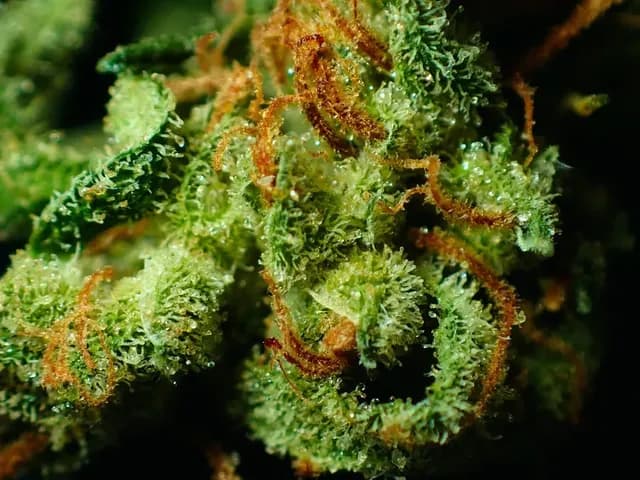 sativa
Haze
Blend of Colombian, Mexican, Thai and South Indian sativa landraces (per Leafly; the exact recipe is undocumented)
THC14–23%Myrcene · Alpha-Pinene · Beta-Caryophyllene
- Energetic
- Creative
- Uplifted
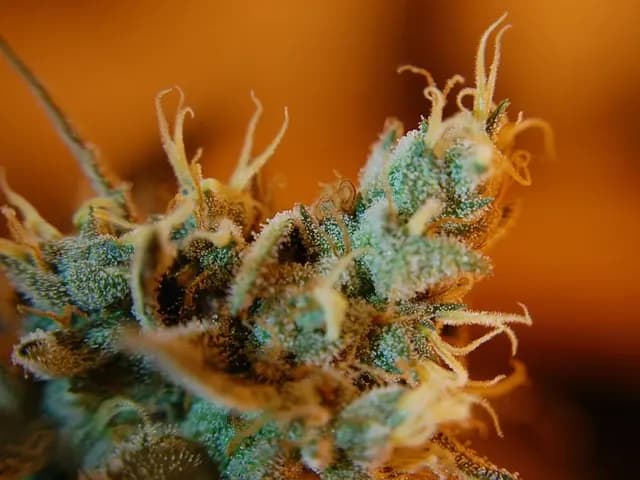 hybrid
Amnesia Haze
Southeast Asian and Jamaican sativa landraces × Afghani-Hawaiian, as described for Soma's line; Leafly lists Haze × Afghani — the exact pedigree is unpublished
THC19–24%Myrcene · Beta-Caryophyllene · Limonene
- Euphoric
- Talkative
- Happy
- hybrid
Blue Dream
Blueberry × Haze; the Santa Cruz clone is usually described as DJ Short Blueberry × a Santa Cruz Haze, and some seed versions use Super Silver Haze
THC17–24%Myrcene · Alpha-Pinene · Beta-Caryophyllene
- Creative
- Euphoric
- Happy
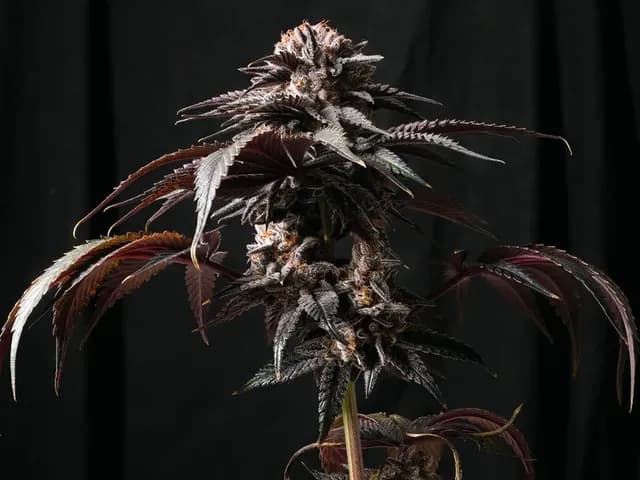 hybrid
Strawberry Cough
Thought to be Strawberry Fields × Haze (the original clone's genetics are unconfirmed)
THC15–20%Myrcene · Alpha-Pinene · Beta-Caryophyllene
- Uplifted
- Energetic
- Happy