














THCA Flower Explained: Why It's Sold as Hemp and What Changes in 2026
THCA flower turns into ordinary THC when you light it, yet it has been sold as hemp. Federal law closes that gap on December 11, 2026. Here is how the loophole worked.
This guide is about the United States — not the country you picked in the header.
Key takeaways
- THCA is the raw acid form of THC; heat from smoking, vaping or baking converts it into delta-9 THC.
- THCA flower was sold as hemp because post-harvest products were often tested for delta-9 THC only, not total THC.
- Public Law 119-37, signed November 12, 2025, redefines hemp by total THC including THCA and caps final products at 0.4 mg per container.
- A September 2, 2026 funding law pushed most of those changes, including the total-THC rule, to December 11, 2026; fully synthetic cannabinoids still lose hemp status on November 12.
- Texas already counts THCA toward its 0.3% limit under a rule adopted March 31, 2026, which is being challenged in court.
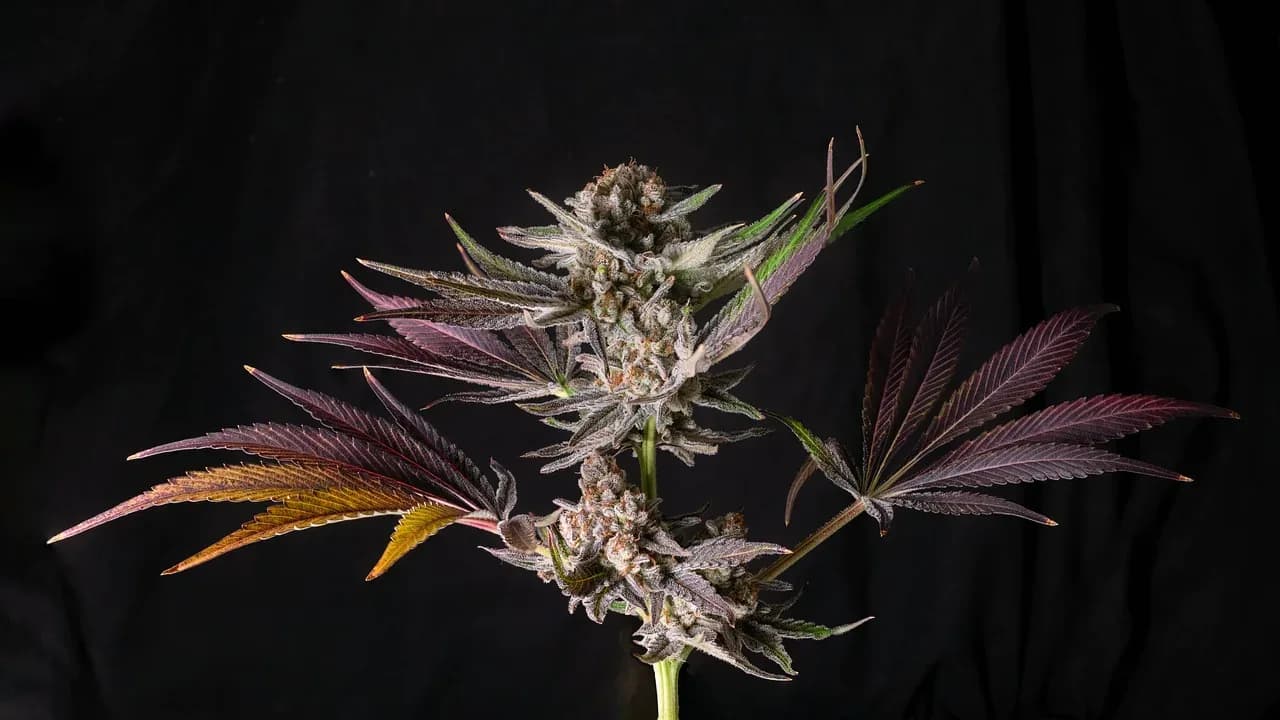
A jar of "hemp" flower testing at 0.2% delta-9 THC and 25% THCA is, once you light it, roughly a 22% THC product. That arithmetic is the whole THCA business model, and it is the part Congress rewrote in November 2025.
This explainer covers the chemistry, the legal gap, the dates that matter this fall and what buyers should check before then. It is not legal advice; state law can be stricter than federal law.
What is THCA?
THCA (tetrahydrocannabinolic acid) is the form in which the cannabis plant actually makes THC, and it does not produce a high until heat converts it.
The plant stores its THC as an acid with an extra carboxyl group. Heat removes that group in a reaction called decarboxylation, turning THCA into delta-9 THC, the intoxicating compound. The U.S. Drug Enforcement Administration described the conversion this way in a May 13, 2024 letter from Terrence Boos, chief of its Drug and Chemical Evaluation Section: decarboxylation converts THCA to delta-9 THC, so the hemp test has to account for THCA.
Laboratory work shows how fast this happens. Researchers at the University of Mississippi (Wang and colleagues, Cannabis and Cannabinoid Research, 2016) heated samples at 80 to 145 °C for up to 60 minutes and found THCA converted about twice as fast as the acid forms of CBD and CBG. A lighter or a vape coil runs far hotter than that, which is why smoked THCA flower behaves like regular cannabis.
- What THCA is
- The acid precursor of delta-9 THC
- Intoxicating raw?
- No, not until heated
- Conversion factor
- Total THC = delta-9 THC + 0.877 × THCA
- Federal change
- Total THC counts from December 11, 2026
- Synthetics deadline
- November 12, 2026
How the total THC math works
Labs convert THCA to its THC equivalent by multiplying by 0.877, the ratio of the two molecules' weights.
The U.S. Department of Agriculture's hemp rule (7 CFR 990.1) defines total THC as delta-9 THC plus 0.877 times THCA, on a dry-weight basis. Growers have had to pass that test before harvest since the USDA's 2021 final rule: a sample collected no more than 30 days before harvest must come in at or under 0.3% total THC, after allowing for the lab's measurement of uncertainty.
| Label reading | Delta-9 THC | THCA | Total THC (0.877 rule) |
|---|---|---|---|
| Typical "THCA flower" jar | 0.2% | 25% | about 22.1% |
| Hemp grown for CBD, passing the field test | 0.05% | 0.25% | about 0.27% |
| Dispensary flower in a study the CDC cites (online dispensaries in three legal states) | — | — | 22% average |
The first two rows are worked examples, not test results. The third uses the average THC the CDC cites from a study of online dispensaries in three legal-adult-use states: 22%, with a range of 0% to 45%. The point: once THCA is counted, the "hemp" jar and the dispensary jar sit in the same range.
Why THCA flower could be sold as hemp
The 2018 Farm Bill defined hemp by delta-9 THC concentration, and sellers argued that harvested, dried flower only had to meet that delta-9 number.
That created two tests for one plant. In the field, USDA rules required a total-THC test. After harvest, flower that had been cured and packaged was often tested for delta-9 THC alone, and a label showing 0.2% delta-9 was presented as compliant even with 25% THCA beside it.
The DEA rejected that reading. In its May 2024 letter, reported by Marijuana Moment, Boos wrote that cannabis-derived THCA does not meet the definition of hemp under the Controlled Substances Act. Hemp attorneys countered that the statute said delta-9, not total THC, for harvested material. Congress settled the argument in late 2025.
What changes on November 12 and December 11, 2026?
Two federal laws set two dates: synthetic cannabinoids lose hemp status on November 12, and the total-THC definition that ends most THCA flower sales takes effect on December 11.
DEA letter on hemp-derived cannabinoids addresses THCA and testing after decarboxylation.
Second DEA letter: cannabis-derived THCA "does not meet the definition" of hemp.
Public Law 119-37 signed. It redefines hemp as 0.3% total THC "including tetrahydrocannabinolic acid" and caps final hemp-derived cannabinoid products at 0.4 mg total THC per container, effective 365 days later.
H.R. 6500, a continuing appropriations law, is signed. It moves most hemp changes to December 11, 2026 but keeps November 12 for fully synthetic cannabinoids.
Cannabinoids the plant cannot naturally produce lose federal hemp status.
Total-THC definition, the synthesized-cannabinoid exclusion and the 0.4 mg per-container cap take effect.
According to the Legal Information Institute's annotated text of 7 U.S.C. 1639o, the new definition covers "total tetrahydrocannabinols concentration (including tetrahydrocannabinolic acid)" of not more than 0.3% on a dry-weight basis. Foley Hoag (September 15, 2026) and Dykema's Cannabis Law Blog (September 9, 2026) both describe the 30-day delay; Dykema adds that the delay does not appear to apply uniformly, so some products could change status on November 12.
For flower, the practical result is the same on either date: high-THCA flower fails a 0.3% total-THC test by a wide margin. The Hemp Law Group wrote on September 3, 2026 that products relying on high THCA with low delta-9 "are among the most directly affected." The FDA has also been told to publish lists of naturally occurring and THC-class cannabinoids and to define "container"; as of that date, those lists were unpublished.
Which states already restrict THCA flower?
Some states did not wait for Congress; Texas is the largest.
The Texas Department of State Health Services adopted a rule on March 31, 2026 that counts both delta-9 THC and THCA toward the 0.3% dry-weight limit, which rules out most smokable hemp flower. According to the Texas State Law Library (updated August 5, 2026), the rule is being challenged in court, and the Fifteenth Court of Appeals has allowed it to stay in effect while the case continues, although enforcement has been unclear. Texas also bars sales to anyone under 21.
Other states have their own hemp rules, and they change often. Our guide to delta-8 and hemp THC in 2026 tracks federal and state changes for the whole hemp-THC aisle.
How to judge a THCA product before December
If you buy THCA flower while it is still sold, treat it as regular cannabis and check the paperwork more carefully than you would at a licensed dispensary.
- Read total THC, not delta-9 — multiply THCA by 0.877 and add delta-9; that is roughly what you will inhale. Our COA guide shows where each number sits.
- Match the batch — the lab report should carry the same batch or lot number as the package, and a test date that fits the harvest.
- Look for contaminant panels — pesticides, heavy metals, mold and residual solvents. Hemp flower is not tested under the same state programs as dispensary cannabis.
- Be wary of cross-state shipping — online sellers can disappear once the rules change; see our fake online dispensary red flags and the Verdex Red List.
- Do not stock up — after the effective date, flower over the limit is not hemp under federal law, whenever you bought it.
Where adult-use cannabis is legal, the simpler option is a licensed dispensary: the product is tested under state rules and the legal status does not hinge on a lab's choice of formula. Our state hubs for Colorado, California and New York link to the regulators.
FAQ
Does THCA get you high?
Not in its raw form. When THCA is heated by smoking, vaping or baking, it converts into delta-9 THC, which is intoxicating. That is why THCA flower smoked in a joint behaves like ordinary cannabis.
Is THCA flower legal in 2026?
Under federal law it can still be sold as hemp until December 11, 2026, when hemp is redefined by total THC including THCA. After that date, flower above 0.3% total THC is not hemp. Some states, including Texas, already count THCA under their own rules.
How do I calculate total THC from a THCA label?
Multiply the THCA percentage by 0.877 and add the delta-9 THC percentage. A product with 0.2% delta-9 THC and 25% THCA works out to about 22.1% total THC, which is in the same range as dispensary flower.
Will THCA flower show up on a drug test?
It can. Heated THCA becomes delta-9 THC, and standard drug tests look for THC and its metabolites. A hemp label does not protect you from a positive result.
What is the difference between the November 12 and December 11 dates?
November 12, 2026 is when fully synthetic cannabinoids that the plant cannot produce lose federal hemp status. The September 2, 2026 funding law delayed the rest, including the total-THC definition and the 0.4 mg per-container cap, to December 11, 2026.
Sources
- Legal Information Institute, Cornell Law School — 7 U.S. Code § 1639o — Definitions (with 2025 amendment by Pub. L. 119-37) · checked Sep 2026
- Legal Information Institute, Cornell Law School — 7 CFR § 990.1 — Meaning of terms (Total THC, decarboxylation) · checked Sep 2026
- Foley Hoag LLP, Cannabis and the Law — A Temporary Reprieve for Hemp-THC Products… But what now? · Sep 15, 2026
- Dykema, Cannabis Law Blog — Federal Intoxicating Hemp Ban Changes Pushed Back Until December 11, 2026 · Sep 9, 2026
- Hemp Law Group — Federal Hemp Ban 2026: Where Things Stand · Sep 3, 2026
- Marijuana Moment — DEA Says 'THCA Does Not Meet The Definition' Of Legal Hemp · May 27, 2024
- USDA Agricultural Marketing Service — Frequently Asked Questions — Domestic Hemp Production Program · checked Sep 2026
- Texas State Law Library — Consumable Hemp Products — Cannabis & the Law · Aug 5, 2026
- PubMed — Decarboxylation Study of Acidic Cannabinoids (Wang et al., Cannabis and Cannabinoid Research) · 2016
- Centers for Disease Control and Prevention — Understanding Your Risk for Cannabis Use Disorder · Dec 5, 2024
More on laws & regulation
Is Weed Legal in Ireland? What the Law Says in 2026
Verdex Editorial Team · Oct 7, 2026 · 4 min read
Is Weed Legal in Denmark? Copenhagen Fines and Limits
Verdex Editorial Team · Oct 7, 2026 · 4 min read
Is Weed Legal in Greece? What Tourists Risk in 2026
Verdex Editorial Team · Oct 7, 2026 · 5 min read
Is Weed Legal in Chile? What the Law Allows in 2026
Verdex Editorial Team · Oct 7, 2026 · 3 min read
STIIIZY Dispensary Guide: Stores, Pods, Deals and Recalls
Verdex Editorial Team · Oct 7, 2026 · 4 min read
How to Spot a Counterfeit Vape Cart: A 60-Second Checklist
Verdex Editorial Team · Oct 7, 2026 · 7 min read
CBD Shops in Belgium: What's Legal to Sell in 2026
Verdex Editorial Team · Oct 7, 2026 · 3 min read
How Long Does THC Stay in Your System? Urine, Blood, Saliva, Hair
Verdex Editorial Team · Oct 7, 2026 · 6 min read
Growing Cannabis at Home Legally: Plant Limits by State and Country
Verdex Editorial Team · Oct 7, 2026 · 5 min read
Comments
No comments yetQuestions, corrections or your own experience — start the conversation.