






























How to Spot a Counterfeit Vape Cart: A 60-Second Checklist
Fake THC cartridges are made to look like the real thing. Here is what the EVALI outbreak and government lab tests show, and the quick checks that expose most knockoffs.
Key takeaways
- Most people hurt in the 2019 EVALI outbreak used THC vapes from informal sources; CDC counted 2,807 hospitalized cases and 68 deaths by February 2020.
- Packaging is the easiest part to fake. CDC investigators found one counterfeit-heavy brand whose boxes were easy to buy online.
- The strongest single check is the seller: a store or delivery service you can find in an official license lookup.
- Match the batch or lot number on the package to a lab report (COA) you open yourself, not only through the QR code on the box.
- Government testing of illicit B.C. cartridges found unauthorized pesticides in every sample and THC far below the labeled amount.
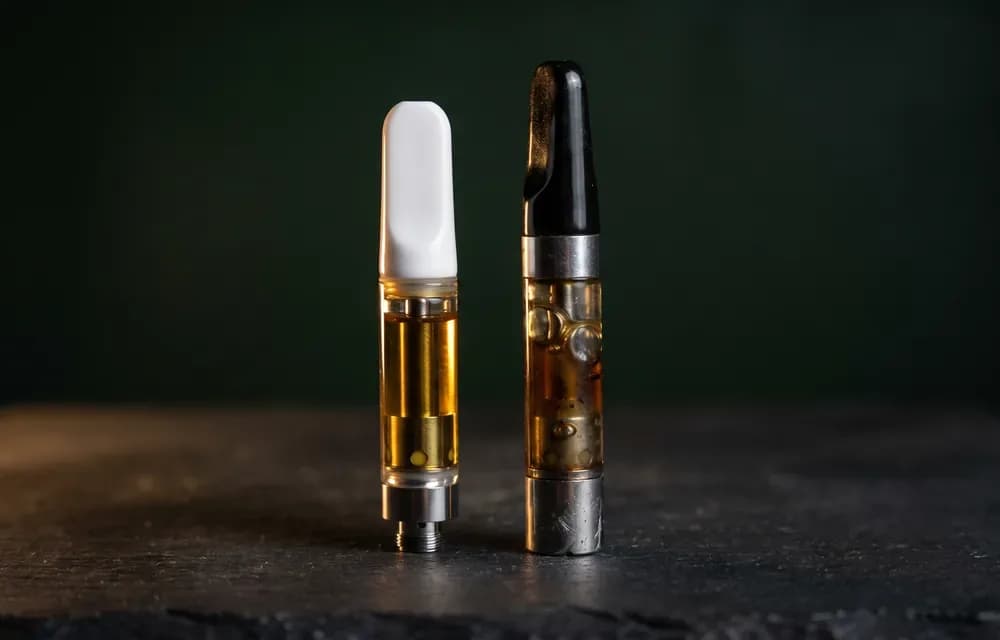
A counterfeit vape cart is a THC cartridge sold under a brand, label or potency claim that is not what it says. Some are generic cartridges in packaging bought online; others carry brand names with no licensed company behind them. Regulators care about them for one reason: nobody tested what is inside.
This guide explains what the 2019 lung-injury outbreak and later government testing found. It then gives you a checklist you can run at the counter in about a minute, a deeper batch and lab-report check for when you get home, and clear steps if you have already used a cart you now doubt.
2,807
hospitalized EVALI cases or deaths reported to CDC
CDC, as of Feb. 18, 2020
68
confirmed deaths in 29 states and D.C.
CDC, as of Feb. 18, 2020
48 of 51
patients with vitamin E acetate in lung fluid samples
CDC
Why fake carts are a health problem, not just a rip-off: the EVALI evidence
In 2019, U.S. hospitals began seeing a wave of severe lung injuries in people who vaped. The CDC named it EVALI (e-cigarette, or vaping, product use–associated lung injury). By February 18, 2020, when the CDC stopped collecting case data from states, it had counted 2,807 hospitalized cases or deaths, including 68 confirmed deaths.
Investigators kept finding the same pattern:
| Finding | Figure |
|---|---|
| Patients with product information who reported using THC-containing products | 82% |
| Of those THC users, got products only from informal sources (friends, family, dealers, online sellers) | 78% |
| Bought only from commercial retail sources | 16% |
| EVALI patients tested with vitamin E acetate in lung fluid (none in a healthy comparison group) | 48 of 51 |
| Illinois and Wisconsin patients who named one brand, Dank Vapes | 66% (57 of 86) |
The CDC says vitamin E acetate was used mainly in THC vaping products. Its earlier report from Illinois and Wisconsin shows how counterfeits fit in: it called Dank Vapes the most prominent of a class of largely counterfeit brands and noted that its packaging was easy to buy online. In practice, anyone could fill cheap cartridges and put them in a box that looked like a brand.
It is not only vitamin E acetate: what British Columbia's 2022 tests found
Vitamin E acetate is the best-known culprit, but it is not the only risk. In 2022, British Columbia's Cannabis Secretariat published tests of illicit products seized from unlicensed storefronts. Health Canada's lab found no vitamin E acetate in 25 illicit cartridges. The same cartridges told a different story on pesticides and potency:
- Every cartridge contained pesticides not authorized for use on cannabis, with an average of nine different pesticides per sample and 16 in two samples.
- All but one cartridge (96%) had pesticide levels high enough that the report's authors judged the spraying likely deliberate. The fungicide myclobutanil reached 1,503.9 ppm in one sample.
- Only 7 of 25 cartridges listed a THC figure. Those seven claimed an average of 83% THC and actually averaged 19.9%.
The takeaway is simple: a cart that looks fine can still carry contaminants you cannot see, smell or taste. The point of the checks below is to find out whether anyone tested it.
The 60-second checklist: seven things to confirm before you pay
Run through this before you pay. If you cannot tick the first two items, the rest barely matter.
- Licensed seller — You bought it from a store or delivery service you can find in the official license lookup for your state or province. See our California, Colorado and Canada guides for where to check.
- Visible license — In California, retailers must display their state license in the window, and you can scan the QR code on that certificate to confirm the status.
- Required label details — A California cannabis product must show the licensed manufacturer's name, a phone number or website, the date it was packaged for retail sale, a unique identifier (UID) and a batch or lot number. Missing fields are a red flag.
- Canadian markings — Legal products carry a provincial excise stamp, a yellow bilingual health warning and the standardized THC symbol. No stamp means it is not from the legal system.
- Believable potency — A very high THC claim on a cheap cart is a warning, not a bonus. In the B.C. tests, labeled potency was more than four times the measured average.
- Batch you can look up — There is a batch or lot number you can match to a lab report on the brand's own website.
- Normal buying process — No cash-only deals from a social media account, no "plug" with a price list, no unlicensed pop-up shop. These are the informal sources CDC linked to most EVALI cases.
How to check the batch, QR code and lab report at home
A certificate of analysis (COA) is the lab report for one batch. Checking it takes a few minutes and is the best way to confirm that the cart in your hand is the product a licensed lab tested.
- Find the batch or lot number
It is printed on the package, usually near the packaging date and UID. - Go to the brand's site yourself
Type the brand's web address or find it through the licensed retailer. Treat the QR code on the box as a shortcut, not proof: a counterfeiter can print a code that points anywhere, including to a copied lab report. - Open the COA for that exact batch
The batch number on the report must match the package. A generic "sample results" page for the product line does not count. - Check the lab
In California, a compliance COA must name the lab, its licensed address and its license number, and carry the heading "Regulatory Compliance Testing." Look the lab up in the state's license search. - Check that every safety panel passed
For vapes that means pesticides, heavy metals, microbial impurities, mycotoxins and residual solvents. Our COA guide explains each panel. - Compare the potency
California treats a label as accurate when cannabinoid figures are within plus or minus 10% of the COA. A large gap is a reason to ask questions.
Packaging and hardware tells, and why a good box proves nothing
Packaging is the easiest part of a counterfeit to get right, because it can be bought separately. Use the table below to spot the obvious fakes, but remember that a convincing box proves nothing on its own.
| What to look at | Licensed product | Warning sign |
|---|---|---|
| Seller | Store or delivery service listed in an official license lookup | Friend of a friend, social media account, unlicensed storefront |
| Label fields (California) | Manufacturer name, contact, packaging date, UID, batch or lot number, THC content | Missing batch number or UID; brand name with no licensed manufacturer |
| Canadian stamp | Provincial excise stamp, yellow health warning, THC symbol | No excise stamp, or packaging styled like candy or a snack |
| Potency claim | Backed by a batch COA from a licensed lab | Extreme THC figure with no batch report |
| Brand | Company you can find as a licensee | Brand name that appears on carts sold everywhere, from anyone |
| Price | In line with licensed stores in your area | Far below licensed prices, especially for "premium" brands |
Hardware is a weak signal. The risk lives in the oil, not the plastic. Leaks, a burnt taste or a cart that clogs are reasons to stop using it, but a clean-looking cart is not evidence that the oil was tested.
Already used a cart you doubt? Four steps
If you have vaped a cart you now suspect, do not panic, and do not ignore symptoms either. Here is a sensible order of steps.
- Stop using it and keep it
Put the cart and its packaging aside in a sealed bag, out of reach of children and pets. They may help a clinician or regulator later. - Know the symptoms
See the table below from CDC's 2019 clinical guidance. Stomach symptoms sometimes came first. - Get medical advice
Call your doctor, or U.S. Poison Control at 1-800-222-1222. In Canada, call 1-844-POISON-X (1-800-463-5060 in Quebec). Tell the clinician that you vaped a THC product and where it came from. - Report it
In the U.S., report the product to the FDA's Safety Reporting Portal and, in California, file a complaint with the Department of Cannabis Control. You can also report the seller to Verdex so we can check it for the Red List.
| Symptom group (EVALI patients, CDC 2019) | Share of patients |
|---|---|
| Respiratory: cough, chest pain, shortness of breath | 95% |
| Stomach: abdominal pain, nausea, vomiting or diarrhea | 77% |
| Fever, chills or weight loss | 85% |
Where counterfeits usually come from: informal sellers and unlicensed storefronts
The research points to the same places again and again. In the Illinois and Wisconsin investigation, 89% of THC products were acquired from informal sources, while 83% of nicotine products came from commercial vendors. The B.C. samples were seized from unlicensed storefronts that looked like shops. Online, the pattern repeats: sellers who ship THC carts anywhere, take payment by crypto or e-transfer and show no license number.
A licensed seller is not a guarantee of perfection, and recalls do happen in the legal market. But licensed products go through required testing, carry traceable batch numbers and can be recalled. Counterfeits have none of that. If you find a seller that looks wrong, check our Red List and our methodology for how we verify listings.
This guide is general safety information, not medical advice. If you feel unwell after vaping, contact a health professional.
FAQ
How can you tell if a THC vape cart is fake?
Start with the seller: a real cart comes from a store or delivery service you can find in an official license lookup. Then check the label for a batch or lot number, a UID and the licensed manufacturer's name, and match the batch to a lab report you open on the brand's own website.
Is a QR code on the box proof that a cart is real?
No. A QR code can link anywhere, and counterfeit packaging is easy to buy. Use the code as a shortcut only, then confirm that the batch number on the lab report matches your package and that the lab is licensed.
Did vitamin E acetate cause EVALI?
CDC found vitamin E acetate in lung fluid from 48 of 51 EVALI patients tested and in none of a healthy comparison group. British Columbia's 2022 report describes a strong association between the additive and EVALI. FDA said no single substance was found in every sample it tested, so other ingredients have not been ruled out.
Are counterfeit carts still a risk now that EVALI cases have dropped?
Yes. British Columbia's 2022 tests of illicit cartridges found no vitamin E acetate but did find unauthorized pesticides in every cartridge and THC levels far below the labels. The underlying problem, untested oil, has not gone away.
What should I do if I feel sick after using a cart?
Stop using it and keep the cart. Contact a doctor or Poison Control (1-800-222-1222 in the U.S.; 1-844-POISON-X in Canada). If you have trouble breathing or chest pain, call 911 or go to an emergency department.
Sources
- Centers for Disease Control and Prevention (archived) — Outbreak of Lung Injury Associated with the Use of E-Cigarette, or Vaping, Products · checked Aug 2021
- Centers for Disease Control and Prevention — E-cigarette Product Use, or Vaping, Among Persons with Associated Lung Injury — Illinois and Wisconsin, April–September 2019 (MMWR 68(39)) · Oct 4, 2019
- Centers for Disease Control and Prevention — Update: Interim Guidance for Health Care Providers Evaluating and Caring for Patients with Suspected EVALI — United States, October 2019 (MMWR 68(41)) · checked Oct 2019
- U.S. Food and Drug Administration — Lung Injuries Associated with Use of Vaping Products · Apr 13, 2020
- BC Cannabis Secretariat, Ministry of Public Safety and Solicitor General — Chemical Analysis of Illicit Cannabis · checked Jul 2022
- California Department of Cannabis Control — What's legal · checked Sep 2026
- Legal Information Institute, Cornell Law School — Cal. Code Regs. tit. 4, § 17406 — Informational Panel Labeling Requirements · checked Sep 2026
- Legal Information Institute, Cornell Law School — Cal. Code Regs. tit. 4, § 15726 — Certificate of Analysis · checked Sep 2026
- Health Canada — Reduce your risk: Choose legal cannabis · May 19, 2026
- Health Canada — Cannabis poisonings in children · Jul 8, 2024
More on safety
THC Gummies and Vapes in Australia: What's Actually Legal in 2026
Verdex Editorial Team · Oct 7, 2026 · 3 min read
Prague 'Cannabis Shops': What They Can Legally Sell in 2026
Verdex Editorial Team · Oct 7, 2026 · 3 min read
Cannabis in Mexico for Tourists: Cancún, Mexico City and Fines
Verdex Editorial Team · Oct 7, 2026 · 4 min read
Cannabis Recalls: How to Check if a Product You Bought Was Recalled
Verdex Editorial Team · Oct 7, 2026 · 6 min read
STIIIZY Dispensary Guide: Stores, Pods, Deals and Recalls
Verdex Editorial Team · Oct 7, 2026 · 4 min read
CBD Shops in Belgium: What's Legal to Sell in 2026
Verdex Editorial Team · Oct 7, 2026 · 3 min read
Is Weed Legal in Ireland? What the Law Says in 2026
Verdex Editorial Team · Oct 7, 2026 · 4 min read
Medical Marijuana in Poland: Rpw Prescription in 2026
Verdex Editorial Team · Oct 7, 2026 · 4 min read
How Long Does THC Stay in Your System? Urine, Blood, Saliva, Hair
Verdex Editorial Team · Oct 7, 2026 · 6 min read
Comments
No comments yetQuestions, corrections or your own experience — start the conversation.