































How Long Does THC Stay in Your System? Urine, Blood, Saliva, Hair
Detection windows from controlled studies, why fat storage keeps daily users positive for weeks, and why detox drinks only dilute.
Key takeaways
- Urine: under 2 days after one use at the 50 ng/mL screen; averages of 4–15 days for regular users in a supervised study.
- Saliva tests mostly reflect the last 48 hours; blood can stay positive for weeks in some daily users.
- Driving limits range from 'any trace' (Australia) to 3.5 ng/mL serum (Germany).
- Detox drinks work only by dilution, which labs detect with creatinine and specific-gravity checks.
Less than two days. That was the average urine detection window after one cannabis cigarette in the controlled study most toxicologists still cite, using the 50 ng/mL screening cutoff common in workplace testing (Huestis, Mitchell and Cone, 1995). A more sensitive 20 ng/mL test stretched the window to between one and six days for the same volunteers. Daily users, studied later under round-the-clock supervision, kept producing positive samples for weeks.
So there is no single answer, only windows. Each depends on which body fluid is tested, which molecule the lab looks for, where the cutoff sits and how much THC is stored in your body. This guide lays out those windows with the studies behind them, explains why fat matters, and tests the popular shortcuts against the evidence.
Four tests, four different molecules
Urine and hair tests mostly look for THC-COOH, an inactive breakdown product; blood and saliva tests look for THC itself, which is why they reflect recent use far better.
| Test | What it measures | Typical window | Key study |
|---|---|---|---|
| Urine (immunoassay, 50 ng/mL) | THC-COOH metabolite | Under 2 days after one use; about 4–15 days on average for regular users | Huestis 1995; Goodwin 2008 |
| Urine (GC-MS confirmation, 15 ng/mL) | THC-COOH | Roughly twice the 50 ng/mL window | Huestis 1995 |
| Saliva (oral fluid) | THC deposited in the mouth | Mostly under 48 hours, even in daily users | Lee 2011 |
| Blood | THC and metabolites | Hours in occasional users; up to weeks in some daily users | Bergamaschi 2013 |
| Hair | THC and THC-COOH in the shaft | Months, but misses many light users | Taylor 2017 |
THC-COOH
11-nor-9-carboxy-THC, the main inactive metabolite of THC. It is what most urine tests detect. A positive urine result therefore shows past exposure, not that someone is high right now.
How use frequency stretches the urine window
The more THC you have stored, the longer THC-COOH keeps appearing in urine. In a supervised abstinence study, 60 users were kept on a secure research unit for up to 30 days and every urine sample was screened (Goodwin et al., 2008).
4.3 days
average time to last positive, lightest users in the study
Goodwin et al., J Anal Toxicol 2008
9.7 days
average for the middle group
Goodwin et al., 2008
15.4 days
average for the heaviest group; some ran longer
Goodwin et al., 2008
The groups were sorted by how much metabolite they excreted at admission, which tracks recent intake. The figures are averages, so a heavy user's own result can fall well outside them. Cutoffs matter as much as habits: the US federal urine rules screen at 50 ng/mL and confirm at 15 ng/mL (49 CFR 40.85), and a lab using a lower screen will catch you for longer.
Why THC lingers: fat storage and slow release
THC dissolves in fat. After use it moves out of the blood into fatty tissue and then leaks back out slowly, which keeps metabolite levels detectable long after the effects are gone.
A small Australian study showed the effect directly: when 14 regular users exercised for 35 minutes, their plasma THC rose slightly, and the rise was larger in people with a higher body mass index (Wong et al., 2013). Earlier work in rats had found a similar rise with fasting, but fasting alone did not significantly change THC levels in the human study. The practical upshot: a hard workout right before a blood test can nudge THC up slightly, not down.
Blood and saliva: the tests used at the roadside
Driving laws target THC in blood or saliva because those tests reflect recent use, but a limit can still be crossed long after the high has faded, especially by daily users.
- In 30 daily smokers kept abstinent for up to 33 days, THC stayed measurable in blood for weeks in some participants; 5% still had at least 1 µg/L after 12 days (Bergamaschi et al., 2013).
- In 28 daily users kept abstinent, THC in oral fluid was generally quantifiable for about 48 hours (Lee et al., 2011).
- Occasional and frequent smokers both tested positive in oral fluid for up to 13.5 hours after one controlled joint (Anizan et al., 2013).
| Country | Legal THC limit for drivers | Source |
|---|---|---|
| United States | Set by each state; no single national limit | State law |
| Canada | 2 ng/mL blood (lesser offence), 5 ng/mL (more serious), 2.5 ng/mL with 50 mg/100 mL alcohol | Department of Justice Canada |
| United Kingdom | 2 µg/L blood | GOV.UK drug-driving limits |
| Germany | 3.5 ng/mL blood serum | §24a StVG |
| Netherlands | 3.0 µg/L blood; 1.0 µg/L when combined with alcohol or other drugs | Besluit alcohol, drugs en geneesmiddelen in het verkeer (via CBR) |
| Australia | In most states, any detectable THC in a roadside saliva test is an offence, with no impairment threshold; rules for prescribed medical cannabis differ by state | Alcohol and Drug Foundation, 2026 |
| Thailand | We could not confirm a published numeric THC limit | — |
For the Australian rules and the medical-patient question there, see our Australia drug-driving guide. Waiting until you feel sober is not a reliable test for any of these limits.
Do detox drinks, niacin or sweating work?
No product speeds up THC elimination in a way that has been shown in controlled studies. What detox drinks do is dilute urine, and labs check for exactly that.
In a controlled experiment, volunteers who drank about a gallon of water or a commercial herbal detox tea produced dilute urine within about 1.5 hours, and cannabis results often flipped to negative (Cone et al., 1998). The authors found the herbal product did nothing beyond what plain water did, and concluded its claims were unfounded. The same samples showed creatinine below 20 mg/dL and very low specific gravity, the markers labs use to flag dilution.
| Method | What actually happens | How labs catch it |
|---|---|---|
| Detox drink or herbal tea | Dilutes urine for a few hours; same effect as water | Creatinine under 20 mg/dL, specific gravity under 1.003 |
| Adding B-vitamins or creatine | Restores color or creatinine to mask dilution | Other validity checks; retest |
| Additives dropped into the cup | Some interfere with immunoassays | Specialized adulterant spot tests |
| Synthetic urine | Replaces the sample | Temperature check; missing normal urine components |
| Exercise | May release a little stored THC into blood | Not a masking method at all |
Passive smoke and false positives
Sitting in a smoky room is unlikely to fail a standard urine test, but it can leave traces, and hair is especially vulnerable to outside contamination.
- Eight volunteers who spent time in a Dutch coffee shop absorbed THC, but their urine THC-COOH peaked at 5.0–7.8 ng/mL, well under the 50 ng/mL screen (Röhrich et al., 2010).
- In a UK hair study, 15.2% of cannabis-positive samples had high THC levels in the wash residue, which makes it hard to separate use from exposure (Tsanaclis et al., 2014).
- Hair testing also misses people: it flagged 77% of heavy users but only 39% of light users in one UK comparison (Taylor et al., 2017).
If you take a prescribed THC medicine or a full-spectrum CBD product, say so before the test. Immunoassay screens are only a first pass; a positive should be confirmed by a lab method such as GC-MS or LC-MS/MS, and many programs route results through a medical review officer.
What actually shortens the wait
- Stop using
Time since your last use is the only factor you control. Regular users should count in weeks, not days. - Know the test type
Ask whether it is urine, saliva, blood or hair, and which cutoff applies. The windows differ by a factor of ten or more. - Drink normally
Normal hydration is fine; forcing liters of fluid just before the test risks a dilute flag. - Declare legitimate sources
Prescriptions and CBD products belong on the form. Keep the product's lab report, see how to read a COA. - Ask for confirmation
If a screen is positive and you dispute it, request the confirmatory result and the cutoff used.
FAQ
How long does one joint stay in your urine?
In a controlled study, mean detection after a single cannabis cigarette was under two days with a 50 ng/mL immunoassay. More sensitive tests or a strong dose can extend that to several days.
How long does THC stay in your system if you smoke every day?
Daily users stayed urine-positive for about 15 days on average in the heaviest group of a supervised abstinence study, and some went longer. THC could also be measured in the blood of some daily users for weeks.
Can a saliva test detect weed from last week?
Usually not. Studies of daily users found THC in oral fluid was generally measurable for about 48 hours after they stopped. Most Australian states treat any detectable THC in a roadside test as an offence, so even that window matters.
Do detox drinks work for a THC drug test?
Not in the way they are advertised. A controlled study found a herbal detox tea did no more than plain water: both diluted urine for a few hours. Labs flag dilute samples, and most programs treat them like a failed test.
Does exercise help clear THC before a test?
No evidence says so, and one small study found exercise raised blood THC slightly in regular users, apparently by releasing it from fat. Stopping use and waiting is the only reliable approach.
Sources
- Journal of Analytical Toxicology — Detection times of marijuana metabolites in urine by immunoassay and GC-MS (Huestis, Mitchell, Cone) · 1995
- Journal of Analytical Toxicology — Urinary elimination of 11-nor-9-carboxy-THC in cannabis users during continuously monitored abstinence (Goodwin et al.) · 2008
- Clinical Chemistry — Impact of prolonged cannabinoid excretion in chronic daily cannabis smokers' blood on per se drugged driving laws (Bergamaschi et al.) · 2013
- Clinical Chemistry — Oral fluid cannabinoids in chronic, daily cannabis smokers during sustained, monitored abstinence (Lee et al.) · 2011
- Analytical and Bioanalytical Chemistry — Oral fluid cannabinoid concentrations following controlled smoked cannabis in chronic frequent and occasional smokers (Anizan et al.) · 2013
- Drug and Alcohol Dependence — Exercise increases plasma THC concentrations in regular cannabis users (Wong et al.) · 2013
- Journal of Analytical Toxicology — In vivo adulteration: excess fluid ingestion causes false-negative marijuana and cocaine urine test results (Cone, Lange, Darwin) · 1998
- ADLM Clinical Laboratory News — How people try to beat drug testing (Dasgupta) · checked Feb 2015
- Journal of Analytical Toxicology — Concentrations of THC and THC-COOH in blood and urine after passive exposure to cannabis smoke in a coffee shop (Röhrich et al.) · 2010
- Drug Testing and Analysis — Differentiation between consumption and external contamination when testing for cocaine and cannabis in hair (Tsanaclis et al.) · 2014
- Drug and Alcohol Review — Comparison of cannabinoids in hair with self-reported cannabis consumption (Taylor et al.) · 2017
- eCFR / US Department of Transportation — 49 CFR 40.85 — drug testing cutoff concentrations · checked Sep 2026
- Department of Justice Canada — Drug-impaired driving: blood drug concentration levels · checked Sep 2026
- GOV.UK — Drug driving: table of drugs and limits · checked Sep 2026
- Bundesministerium der Justiz — §24a Straßenverkehrsgesetz (StVG) · checked Sep 2026
- CBR — Rijden onder invloed van drugs: grenswaarden · checked Sep 2026
- Alcohol and Drug Foundation (Australia) — Roadside drug testing · checked Aug 2026
More on lab & science
Edibles Dosing: Why Onset Takes Longer and How Labeling Works
Verdex Editorial Team · Oct 7, 2026 · 6 min read
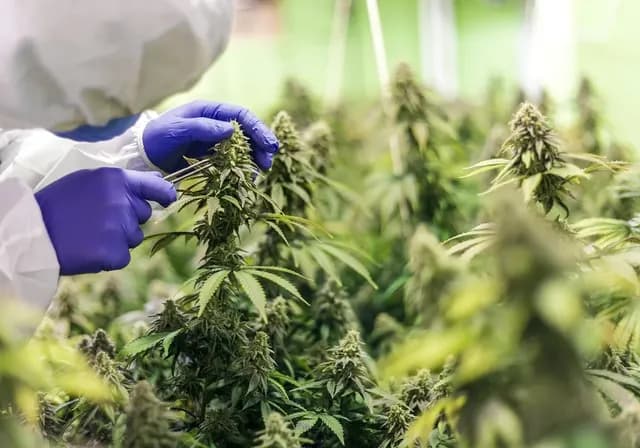
How to Read a Cannabis Lab Report (COA): A Line-by-Line Guide
Verdex Editorial Team · Oct 7, 2026 · 6 min read
STIIIZY Dispensary Guide: Stores, Pods, Deals and Recalls
Verdex Editorial Team · Oct 7, 2026 · 4 min read
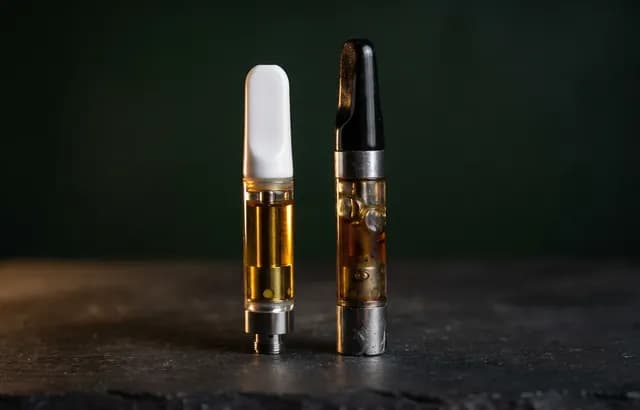
How to Spot a Counterfeit Vape Cart: A 60-Second Checklist
Verdex Editorial Team · Oct 7, 2026 · 7 min read
CBD Shops in Belgium: What's Legal to Sell in 2026
Verdex Editorial Team · Oct 7, 2026 · 3 min read
Is Weed Legal in Ireland? What the Law Says in 2026
Verdex Editorial Team · Oct 7, 2026 · 4 min read
Growing Cannabis at Home Legally: Plant Limits by State and Country
Verdex Editorial Team · Oct 7, 2026 · 5 min read
Dog Ate Weed? Cannabis Toxicity Signs in Pets and What to Do
Verdex Editorial Team · Oct 7, 2026 · 5 min read
Comments
No comments yetQuestions, corrections or your own experience — start the conversation.