

























Moon Rocks, “Cali Weed” and Street Names: What Lab Tests Find
What the names mean, why a California bag proves nothing, and what testing of street cannabis found: mould, lead and synthetic cannabinoids.
Key takeaways
- Moon rocks are oil-coated, kief-rolled buds, far stronger than normal flower.
- “Cali” bags prove nothing; some cannabis is smuggled from legal markets, some is repacked.
- In 1,635 UK drug-checking samples, 26.6% contained synthetic cannabinoids.
- 90% of 60 seized Manchester samples had mould or yeast in industry-commissioned testing.
What is actually inside a shiny foil bag with a California logo? Sometimes cannabis grown legally in North America and smuggled in a suitcase. Sometimes local weed repacked. And sometimes hemp sprayed with a synthetic cannabinoid far more dangerous than THC. The names people search for, from “Cali weed” to “moon rocks”, describe marketing more than contents. This guide translates the names and sets out what lab testing of street cannabis has found.
A glossary of names you'll hear
| Name | What it usually means | What to watch for |
|---|---|---|
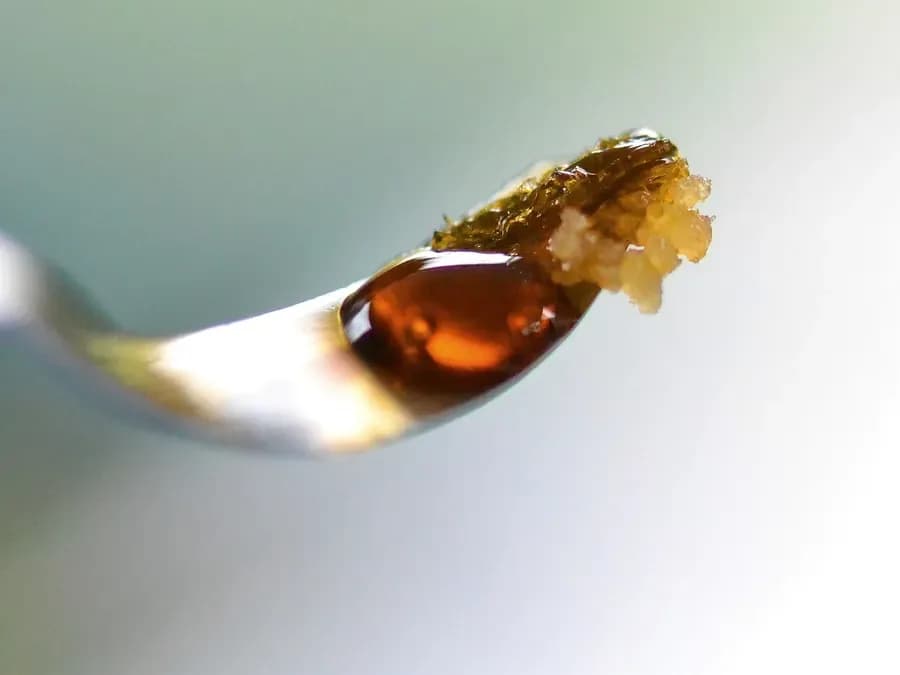
| Moon rocks | Buds dipped in or coated with cannabis oil, then rolled in kief (resin powder) | Very high THC per gram; easy to overdo |
| Cali, Cali pack, Cali weed | Flower sold as grown in California or elsewhere in the US, in branded mylar bags | The bag is not evidence of origin; branded packaging is easy to copy |
| Thai weed (in Europe) | Flower said to come from Thailand's legal market | Smuggled product; UK arrests for Thai-sourced cannabis rose sharply in 2024 |
| CBD weed, “legal weed” | Low-THC hemp flower | Some has been sprayed with synthetic or semi-synthetic cannabinoids |
| Spice, K2 | Synthetic cannabinoids on plant material, sometimes passed off as cannabis | Linked to seizures, psychosis and heart problems |
Hash, rosin and other concentrates have their own guide: hash vs rosin explained.
Moon rocks: potency math, not magic
We found no peer-reviewed study that measured moon rocks as a category, but the arithmetic is simple. The base bud carries whatever THC the strain has; the oil and kief layers add concentrate on top.
NIDA notes that flower and concentrates sold in US dispensaries can exceed 40% THC. Coating a gram of 20% flower with concentrate therefore raises the THC in each gram well above anything a new user is used to, and one joint can contain several times the THC of a standard one. Street versions add another unknown: the oil could be anything.
Is “Cali weed” actually from California?
Some of it genuinely comes from North America. UK law enforcement data show a surge in cannabis carried in air passengers' suitcases from countries where it is legally grown.
15 tonnes
cannabis seized at UK airports in 2024 by late August, up from 5 tonnes in 2023
National Crime Agency, August 2024
378
air-passenger cannabis couriers arrested in the UK in 2024 by late August
National Crime Agency
184 / 75 / 47
arrests tied to cannabis from Thailand / Canada / the US
National Crime Agency
The NCA says organized crime groups exploit access to cannabis grown where it is legal, and sell it in the UK as perceived high-quality product. None of that makes a given bag genuine. A licensed US or Canadian product carries a batch number, a lab result and a regulator-mandated warning; a copy can print all three. And licensed products are tested for the market they were made for, not for months of storage and smuggling.
What testing of street cannabis has found
Several independent datasets now exist. Each has limits: drug-checking samples are often submitted because a buyer is suspicious, and police seizures are not random. Read them as warning signs, not prevalence rates.
| Study | Samples | Key finding |
|---|---|---|
| WEDINOS, UK (Erridge et al., J Psychoactive Drugs) | 1,635 products submitted as cannabis | 42.5% had no natural cannabinoids; 26.6% contained synthetic cannabinoids; 9.9% had no active compound |
| European drug-checking services (Oomen et al., Int J Drug Policy 2022) | 1,142 suspect samples, 9 services, 8 countries | 270 contained the synthetic cannabinoid MDMB-4en-PINACA; herbal and resin samples had under 1% THC; 3 hospitalizations |
| Manchester Metropolitan University with Curaleaf Clinic, 2024 | 60 street samples, Manchester and Northumbria | 90% mould or yeast, 8% lead, 2% bacteria such as Salmonella or E. coli |
| Arizona State University (Environmental Health Perspectives, 2025) | 118 seized samples, Arizona and California | 16% had detectable mycotoxins; some above food-safety thresholds |
| German police seizures (Hundertmark et al., 2025) | 79 samples with semi-synthetic cannabinoids | 70% were flowers; HHC ranged from below the detection limit to 70.9% by weight (the top value was a vape liquid; flowers peaked at 52.3%) |
| Australia, users' own samples (Lorenzetti et al., 2025) | 127 samples from 37 people | Average 12% total THC, 0.3% CBD |
The Manchester work was commissioned by a medical-cannabis company, which has an interest in the result; its findings echo the others but have not, to our knowledge, been published in a journal. For the older pesticide evidence, see our pesticides investigation.
Warning signs, and why you can't rely on them
You cannot see a synthetic cannabinoid. The signs below raise suspicion, but a clean-looking bud can still be sprayed.
- Very cheap “CBD” or “legal” weed with a strong effect — Low-THC plant material that hits hard is the classic adulteration pattern.
- Unusual smell or a wet, sticky film — Sprayed solvents can leave residue.
- Grey, white or fuzzy spots — Possible mould; don't smoke it.
- Effects out of character — Racing heart, confusion, vomiting or seizures after a normal-sized dose are not a typical cannabis reaction.
- Branded bag, no verifiable batch — A lab result you can't look up with the issuing lab is decoration.
Safer options where they exist
The only reliable fix is a supply chain with testing you can check. Where adult-use or medical markets exist, licensed products come with batch lab reports; here is how to read one. Drug-checking services, where legal, can test a sample before you use it. For what is legal in your country, see our country table, and for the same problem in vape form, how to spot a counterfeit cart.
FAQ
What are moon rocks weed?
Moon rocks are cannabis buds coated in cannabis oil and rolled in kief. The added concentrate makes them much stronger per gram than ordinary flower, so small amounts go a long way.
What is Cali weed?
It is slang for cannabis sold as Californian or American, usually in branded mylar bags. Some is genuinely smuggled from North America, but the packaging is easy to copy and proves nothing.
Is Cali weed stronger than normal weed?
Not necessarily. A 2025 Australian study of street cannabis found an average of 12% total THC, and a 2016 study of English seizures found a median of 14.2% THC in sinsemilla, so a Cali-branded bag may well hold ordinary local product.
How can I tell if weed is laced with spice?
Usually you can't by looking at it. Warning signs include cheap 'CBD' weed with strong effects, odd residue, and reactions such as a racing heart, vomiting or seizures; drug-checking services can test samples where they operate.
Is moldy weed dangerous?
Smoking mouldy cannabis can expose you to fungi and mycotoxins, a particular risk for people with weak immune systems or lung disease. Don't use buds with grey, white or fuzzy spots.
Sources
- Journal of Psychoactive Drugs — Prevalence and patterns of cannabis product adulteration: an analysis of WEDINOS data (Erridge, Hall, Sodergren) · 2025
- International Journal of Drug Policy — Cannabis adulterated with the synthetic cannabinoid receptor agonist MDMB-4en-PINACA and the role of European drug checking services (Oomen et al.) · 2022
- The Tab — Warnings issued after heavy metals and mould found in Manchester's street weed · checked Nov 2024
- Curaleaf — Online and unregulated cannabis poses serious health risks (press release) · checked Oct 2024
- Arizona State University News — New study reveals high levels of toxins in seized cannabis from Arizona and California · checked Mar 2025
- Drug Testing and Analysis — Characterising a new cannabis trend: semi-synthetic cannabinoid-containing seizures from Germany (Hundertmark et al.) · 2025
- International Journal of Drug Policy — Cannabis in the wild: analysis of street cannabis (Lorenzetti et al.) · 2025
- Drug Testing and Analysis — Potency of Δ9-THC and other cannabinoids in cannabis in England in 2016 (Potter et al.) · 2018
- National Crime Agency — It's not worth the risk: jail warning for passengers flying to the UK after increase in cannabis arrests · checked Aug 2024
- National Institute on Drug Abuse (NIDA) — Cannabis (Marijuana) · checked Sep 2024
More on safety
THC Vapes and Gummies in the Netherlands: Why Shops Can't Sell Them
Verdex Editorial Team · Oct 26, 2026 · 3 min read
How to Spot a Counterfeit Vape Cart: A 60-Second Checklist
Verdex Editorial Team · Oct 7, 2026 · 7 min read
THC Gummies and Vapes in Australia: What's Actually Legal in 2026
Verdex Editorial Team · Oct 7, 2026 · 3 min read
Prague 'Cannabis Shops': What They Can Legally Sell in 2026
Verdex Editorial Team · Oct 7, 2026 · 3 min read
CBD Oil in Italian Pharmacies: What Is Legal in 2026
Verdex Editorial Team · Nov 7, 2026 · 5 min read
CBD Vapes in the UK: The Disposable Ban and the 1 mg Rule
Verdex Editorial Team · Nov 7, 2026 · 5 min read
CBD Gummies and Drinks in Japan: THC Limits, Labels, Recalls
Verdex Editorial Team · Nov 6, 2026 · 5 min read
Can Cannabis Users Donate Blood in Brazil? The 12-Hour Rule
Verdex Editorial Team · Nov 6, 2026 · 3 min read
What Is CBD and What Does It Actually Do? An Evidence Map
Verdex Editorial Team · Oct 18, 2026 · 4 min read
Comments
No comments yetQuestions, corrections or your own experience — start the conversation.