















CBD Oil in Switzerland: No Product Is Authorised as Food, and Oral Bottles Fail as Cosmetics
Switzerland's cross-agency guide says CBD is a novel food that no one has had approved, scented oils must be denatured, and oral "cosmetic" bottles do not meet the rules. What that means for the CBD oil you see in shops.
This guide is about Switzerland — not the country you picked in the header.
Key takeaways
- Cannabinoids such as CBD are novel foods in Switzerland; as of the May 2025 guide none has been authorised, and unauthorised novel foods may not be sold or used as ingredients.
- Hemp seeds, hemp seed oil, hemp flour and defatted seeds are not novel foods, and leaf tea is fine as an aqueous infusion.
- Since a general ruling of 29 March 2022, CBD "scented oils" sold as chemicals to consumers must be denatured.
- The authorities say CBD oils sold as oral-care cosmetics do not meet legal requirements; safety has not been shown in any report they have seen.
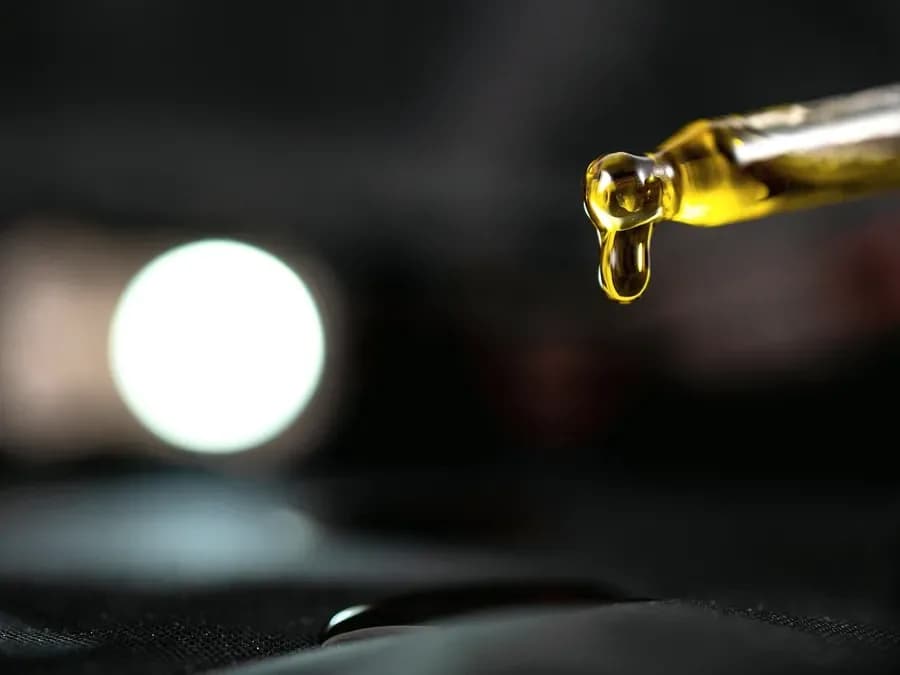
A Swiss CBD shop sells you a bottle labelled as aroma oil. It says "not for consumption", but the picture shows drops under a tongue. The mismatch is the reason the authorities published a 21-page guide, now in version 8.0.
It comes from an expert panel of Swissmedic, the Federal Office of Public Health (FOPH), the Federal Food Safety and Veterinary Office (FSVO) and the cantonal pharmacists and chemists. Their job is to decide who is responsible when a CBD product could be a medicine, a food, a cosmetic or a chemical.
One bottle, five possible categories
| If the bottle is sold as | Authority | What the guide says |
|---|---|---|
| Medicine (medical claims, oral use for treatment) | Swissmedic | Needs authorisation; only Epidyolex is authorised (10 Feb 2021, prescription only) |
| Food or supplement | FSVO, cantonal chemists | CBD is a novel food; none authorised; cannot be sold |
| Cosmetic | FSVO | Allowed for skin use if safe; oral-care oils do not comply |
| Chemical (aroma oil) | Common Notification Authority for Chemicals | Must be denatured for consumers since 29 March 2022 |
| Herbal smoking product or e-liquid | FOPH | Allowed under the Tobacco Products Act; see our vape guide |
The guide says every product is assessed case by case, weighing composition, intended use, dose and claims. Suppliers who state on their website that a product is not for medical use, while linking to pages on medical use, are making therapeutic claims, so medicines law applies.
Why food law blocks CBD
Swiss novel food rules (Art. 15 to 19 of the Ordinance on Foodstuffs and Utility Articles) cover anything not used to a significant degree in the EU or Switzerland before 15 May 1997. CBD extracts and hemp seed oil with added CBD fall in that group. The guide says no cannabinoid has been authorised, and unauthorised novel foods may neither be placed on the market nor used as ingredients.
The FSVO explains its caution in a briefing letter dated 3 December 2021, on the liver effects of CBD in foods. In the EU, the food-safety agency EFSA found gaps in the data and applications have been suspended until they are filled. The Swiss agency says it cannot make a final safety assessment either.
0
cannabinoid novel food authorisations, as of the May 2025 guide
Swissmedic guide v8.0
1
authorised CBD medicine: Epidyolex, from 10 Feb 2021
Swissmedic guide v8.0
29 Mar 2022
date of the general ruling requiring denaturing of CBD scented oils
Common Notification Authority for Chemicals
What is allowed on the food side
- Hemp seeds, seed oil, seed flour and defatted seeds: not novel foods, if the plant meets the definition in Art. 15 FUAO.
- Leaf tea: generally not a novel food, but whoever makes or imports it must show that it was consumed as a food in significant amounts before 15 May 1997 (FSVO). As a flavouring it may only be an aqueous infusion, not a concentrate or syrup.
- THC in food: the Contaminants Ordinance sets maximum delta-9 THC levels, which per the FSVO apply to hemp seeds and products made from them.
- Labelling "contains CBD": not permitted as an ingredient claim, and health claims are not authorised for any cannabinoid.
The cosmetic and aroma-oil workarounds
Because food law is closed, many CBD oils appeared as chemicals ("aroma oil") or cosmetics. The guide says the general ruling of 29 March 2022 requires CBD-containing chemicals sold to end consumers to be denatured, which targets products with implausible claims such as "to fragrance rooms".
Cosmetics are stricter than shops suggest. CBD oils sold as oral-care products "do not comply with the intended use of a cosmetic", and none of the safety reports seen by cantonal authorities demonstrated safety. A product with total THC of 1.0% or more falls under the Narcotics Act altogether.
What the FSVO says on its own page
The food regulator repeats the point in its public page on cannabis and cannabinoids in food. Hemp extracts containing cannabinoids are listed in the European Commission's Novel Food Catalogue, and since use before 15 May 1997 cannot be shown they need an FSVO authorisation or an EU approval. Cannabinoids from hemp, from other plants and synthetic ones are all treated as novel.
The FSVO adds that many products on the market are not compliant because they have not been assessed for health risks, and that for CBD there are signs of possible side effects on the liver. It points to a 2025 review in the journal Nutrients on CBD in foods and supplements, and to 2025 EFSA opinions on synthetic CBD and on delta-8 THC.
The FSVO site lists the guide with a file date of 16 February 2026; the PDF is still version 8.0 of 1 May 2025, and its change history shows no later version (checked 29 September 2026). In March 2026 the EU consumer-safety committee (SCCS) gave scientific advice that CBD is safe in cosmetics up to 0.19%; the FSVO notes that this is guidance, not a binding limit.
For where CBD is sold, tax and the 1% THC line, see our Swiss CBD overview. For flowers and vapes, the rules changed on 1 October 2024; read the tobacco act guide. Sellers in the Swiss CBD shop listing are not endorsed on compliance.
This is general information, not legal advice.
FAQ
Is CBD oil legal in Switzerland?
Products with total THC below 1.0% are not narcotics, but CBD oil must still satisfy the law of its category. As a food it is a novel food that no one has had authorised, so it cannot be sold as one.
Can I buy CBD oil for oral use in Switzerland?
Officially, no compliant food or cosmetic CBD oil for oral use exists. The guide says oral-use cosmetic oils do not meet legal requirements. Prescription medicines are the compliant route.
Which CBD medicine is authorised in Switzerland?
Epidyolex, authorised on 10 February 2021 as a prescription-only add-on treatment for seizures in Lennox-Gastaut and Dravet syndromes in patients from 2 years of age.
Are hemp seed oil and hemp tea legal?
Yes, within limits. Hemp seeds, seed oil and seed flour are not novel foods. Leaf tea is generally not novel either, but sellers must be able to show pre-1997 use, and as a flavouring it is allowed only as an aqueous infusion. THC maximums apply to hemp seed products.
What is a denatured CBD aroma oil?
A general ruling of 29 March 2022 requires CBD-containing chemical products sold to consumers to be denatured, so that they cannot be used orally.
Sources
- Swissmedic, FOPH, FSVO, cantonal pharmacists and chemists (Expert Panel for Delimitation Questions) — Products containing cannabidiol (CBD) and other cannabinoids that are not subject to narcotics legislation: Overview and implementation guide, version 8.0 · checked May 2025
- Federal Food Safety and Veterinary Office (BLV/FSVO) — Cannabis, Hanfextrakte und Cannabinoide als Lebensmittel · checked Sep 2026
- Federal Food Safety and Veterinary Office (BLV/FSVO) — Cannabidiol (CBD) in Kosmetika · checked Sep 2026
More on laws & regulation
Japan's CBN Ban and Other Banned Cannabinoids: HHC, THCH, HHCH
Verdex Editorial Team · Nov 23, 2026 · 4 min read
Buying Ganja Legally in Jamaica as a Resident: Four Routes
Verdex Editorial Team · Nov 22, 2026 · 3 min read
Colombia's Medical Cannabis Industry and Licenses, Explained
Verdex Editorial Team · Nov 22, 2026 · 3 min read
Cannabis and Driving in Luxembourg: The 1 ng/ml Rule
Verdex Editorial Team · Nov 21, 2026 · 4 min read
Medical Cannabis in Ireland: Who Qualifies for MCAP in 2026
Verdex Editorial Team · Nov 23, 2026 · 3 min read
Greening Out: What It Is and What to Do When You're Too High
Verdex Editorial Team · Nov 10, 2026 · 4 min read
Moon Rocks, “Cali Weed” and Street Names: What Lab Tests Find
Verdex Editorial Team · Oct 29, 2026 · 4 min read
What Is CBD and What Does It Actually Do? An Evidence Map
Verdex Editorial Team · Oct 18, 2026 · 4 min read
Comments
No comments yetQuestions, corrections or your own experience — start the conversation.