




























Banned Pesticides in Legal California Cannabis: LA Times
Four of 49 licensed products failed lab tests for banned pesticides, the Times reports. How the new state rules work and how to check what you buy.
Fact-check in progress: our editors haven’t signed this guide off yet. Sources are listed at the end. How we check
This story is about the United States — not the country you picked in the header.
Key takeaways
- The LA Times follow-up of November 8, 2026 found banned pesticides in four of 49 licensed California products, MJBizDaily reported.
- A further 17 products carried pesticides not yet restricted in California cannabis; the state's second testing phase starts April 1, 2028.
- We found no DCC statement on the findings as of November 12, 2026.
- Check the DCC licence search, recalls page and the batch COA; a COA only covers the state panel.
We found no recall tied to these results, and the California Department of Cannabis Control (DCC) had posted nothing on the findings on its news page when we checked on November 12. The newest item there dates from October 29.
What the Times found
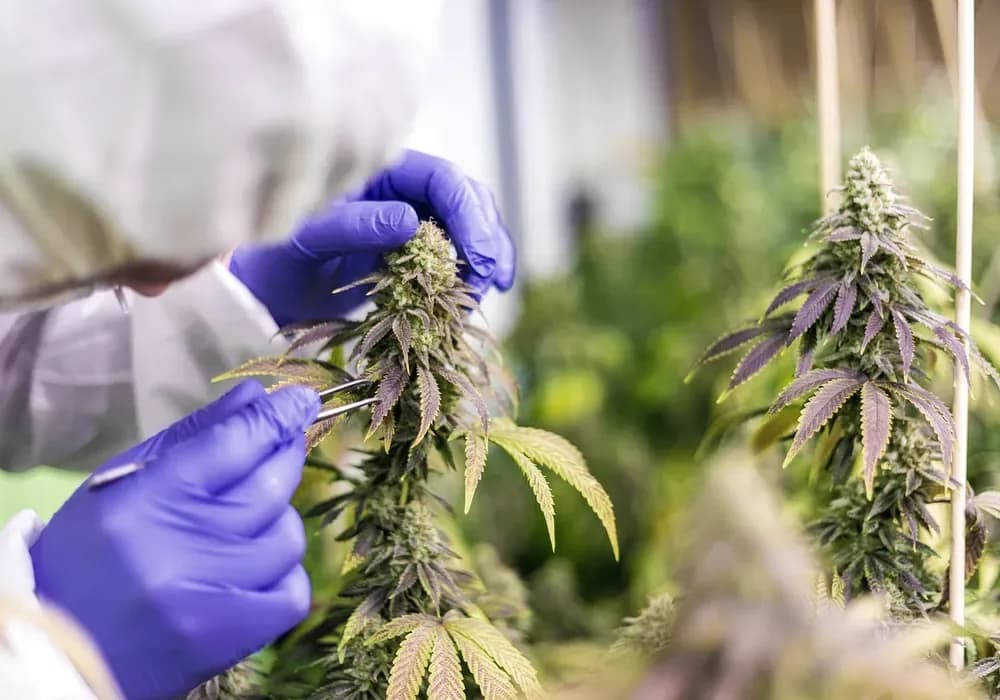
According to MJBizDaily, which summarised the Sunday story, the follow-up used third-party laboratory testing on 49 California cannabis products. Four failed for banned pesticides. A further 17 flower, pre-roll and vape products showed other pesticides that are restricted in other consumer products but not yet in California cannabis. A state reference lab had tested only 35 products in 2026 through late August, the report adds.
The excerpt of MJBizDaily's article we could open names no pesticides and no brands. A clinic blog summarising the Times piece lists specific brands and chemicals, but we could not match that to the original, which our tools could not open, so we do not repeat them. Anyone who needs the product names should read the Times story itself. Until a regulator or court names a product, a brand appearing in a newspaper test is an allegation about one sample, not a finding about a company.
4 of 49
Products failing for banned pesticides
LA Times via MJBizDaily, Nov 10, 2026
17
More products with pesticides not yet restricted in California cannabis
LA Times via MJBizDaily
35
Products tested by the state reference lab in 2026 through late August
LA Times via MJBizDaily
Where the state rules stand
New testing regulations took effect on October 1, 2026, Encore Labs reports. The 21 pesticides formerly in Category I now carry a single action level of 0.10 micrograms per gram. A second phase on April 1, 2028 adds 14 pesticide analytes and revises other limits. That date explains the gap in the Times' findings: some of what labs found is legal to sell today because the list has not reached it yet.
The Times and WeedWeek publish the first pesticide investigation, followed by recalls (see our review of testing studies).
New pesticide-testing rules take effect.
Times follow-up on 49 licensed products.
Second phase: 14 new analytes and revised limits.
What the DCC has said
We found no DCC statement on the new findings. The agency's news page, checked November 12, lists nothing on pesticides since the rules took effect, and its recalls page does not mention pesticides at all. That is a statement about what we could find, not about what the agency is doing behind the scenes.
How a buyer can check a product
| Step | Where | What it tells you |
|---|---|---|
| Confirm the seller is licensed | DCC "Search for a licensed business" | Whether the shop or brand holds a state licence |
| Check for recalls | DCC "Cannabis recalls and safety notices" | Current and past recalls with date, product, reason and business; older than 2024 in an archive |
| Read the lab report | Ask the retailer or brand for the batch COA; see how to read a COA | Pass or fail only for the pesticides on the state panel |
| Report a problem | DCC "Submit a complaint" | Starts a regulator record |
For the other recalls this autumn, see the Lake County farm recall, and for a state-by-state lookup, how to check recalls. To tell licensed shops from illegal ones, read our California buying guide, and browse US sellers. If you feel unwell after using a product, contact a doctor or Poison Control (1-800-222-1222) and keep the packaging and batch number. Facts as of November 12, 2026.
FAQ
What did the LA Times find in California cannabis?
Per MJBizDaily's November 10, 2026 summary, four of 49 licensed products failed third-party lab tests for banned pesticides, and 17 more contained pesticides not yet restricted in California cannabis.
Which brands were named?
The excerpt of the MJBizDaily report we could open names no brands. Read the Los Angeles Times story for product names; a newspaper test of one sample is not a regulator finding.
Has the DCC responded?
We found no DCC statement on the findings as of November 12, 2026. The DCC news page's latest item was dated October 29.
How do I check if a California cannabis product was recalled?
Use the DCC page Cannabis recalls and safety notices, which lists date, product, reason and legal business name, with an archive for recalls before 2024.
Does a clean COA mean a product has no pesticides?
No. It shows results for the compounds the lab was required to test. New rules from October 1, 2026 set a 0.10 microgram per gram action level for 21 former Category I pesticides, and 14 more analytes are added on April 1, 2028.
Sources
- MJBizDaily — More banned pesticides found in legal California cannabis, LA Times reports · Nov 10, 2026
- Encore Labs — California cannabis lab testing rules are changing · 2026
- California Department of Cannabis Control — Department of Cannabis Control news · Nov 12, 2026
- California Department of Cannabis Control — Cannabis recalls and safety notices · Nov 12, 2026
- California Department of Cannabis Control — Consumers · Nov 12, 2026
More on safety
How to Report an Illegal or Unsafe Cannabis Seller (US, Canada, UK)
Verdex Editorial Team · Nov 16, 2026 · 5 min read
Greening Out: What It Is and What to Do When You're Too High
Verdex Editorial Team · Nov 10, 2026 · 4 min read
Moon Rocks, “Cali Weed” and Street Names: What Lab Tests Find
Verdex Editorial Team · Oct 29, 2026 · 4 min read
THC Vapes and Gummies in the Netherlands: Why Shops Can't Sell Them
Verdex Editorial Team · Oct 26, 2026 · 3 min read
Is Weed Legal in Italy? What Tourists Risk in 2026
Verdex Editorial Team · Nov 24, 2026 · 4 min read
Canabidiol Price in Brazil (2026): Pharmacy, Import or Association
Verdex Editorial Team · Nov 24, 2026 · 4 min read
Japan's CBN Ban and Other Banned Cannabinoids: HHC, THCH, HHCH
Verdex Editorial Team · Nov 23, 2026 · 4 min read
Medical Cannabis in Ireland: Who Qualifies for MCAP in 2026
Verdex Editorial Team · Nov 23, 2026 · 3 min read
What Is CBD and What Does It Actually Do? An Evidence Map
Verdex Editorial Team · Oct 18, 2026 · 4 min read
Comments
No comments yetQuestions, corrections or your own experience — start the conversation.